Can automatic pet feeders dispense wet food?
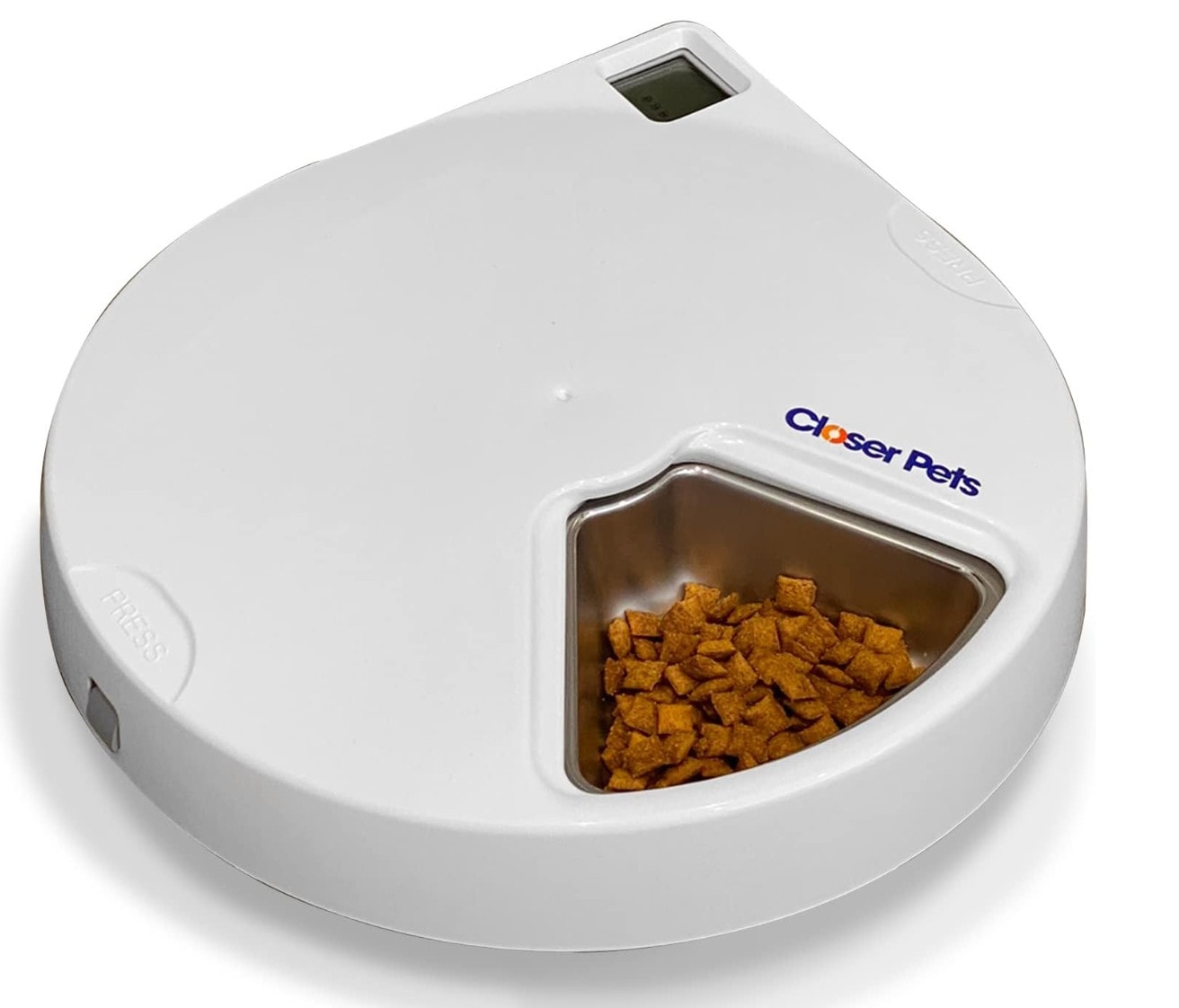
Most automatic pet feeders are designed for dry kibble only — wet food clogs the dispensing mechanism and spoils quickly at room temperature. The Cat Mate C500 is one of the few feeders designed specifically for wet food — it uses 5 individual sealed compartments with optional ice packs to keep wet food fresh for up to 24 hours. If you need to feed wet food automatically, look for a tray-style feeder with individual compartments rather than a hopper-style feeder. For dry kibble, any hopper-style feeder works well.
How much food does an automatic pet feeder hold?
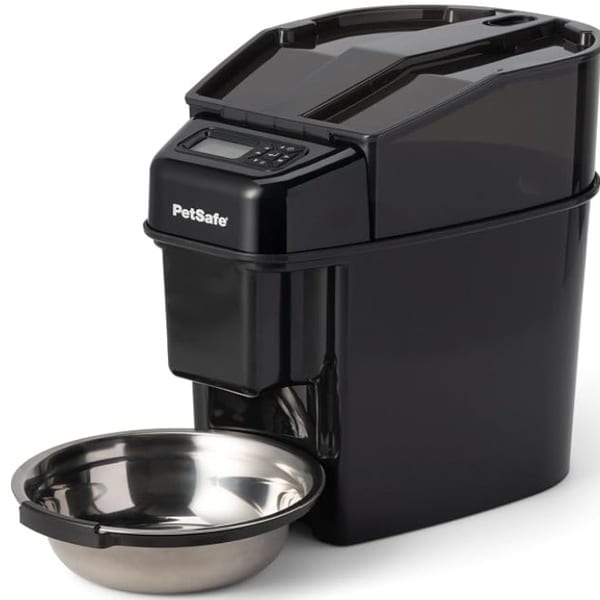
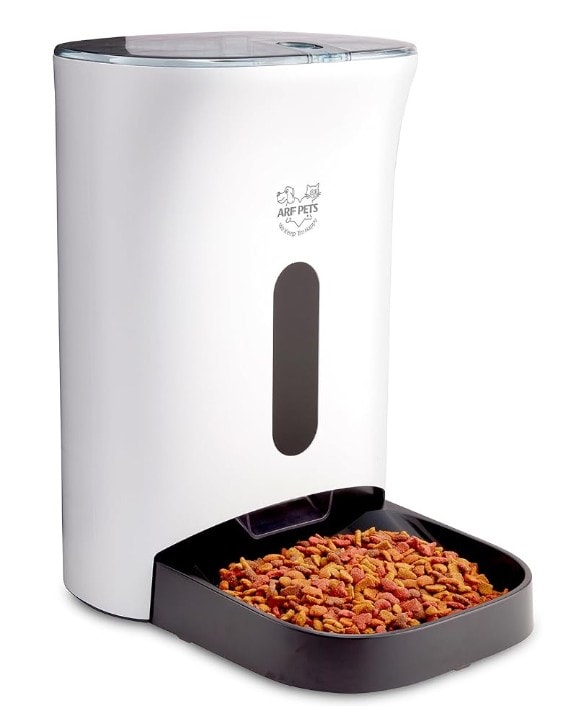
Automatic pet feeder capacity ranges from 1.5 liters (small cats and dogs, 1–2 weeks of food) to 6+ liters (large dogs, 1–2 weeks of food). The PETLIBRO Granary holds 6 liters — approximately 25 cups of kibble — making it the best choice for large dogs or multi-day travel. The PetSafe Smart Feed 2.0 holds 24 cups. The Arf Pets feeder holds 6 liters. For reference, a 30-lb dog eating 2 cups per day will empty a 6-liter hopper in about 12 days. Always check the hopper capacity against your pet's daily food intake before buying.
Do automatic pet feeders work during power outages?
Most automatic pet feeders require AC power and will not dispense food during a power outage. The PETLIBRO Granary and several other models include a USB backup battery port — you can connect a power bank to keep the feeder running during outages. If power reliability is a concern, choose a feeder with battery backup. Gravity feeders (non-automatic, non-electronic) are the most reliable option for power outages but offer no portion control or scheduling.
Are automatic pet feeders safe for pets that eat too fast?
Yes — several automatic feeders include a slow feed mode specifically for fast eaters. The PetSafe Smart Feed 2.0 has a Slow Feed setting that dispenses a meal over 15 minutes in small increments, reducing the risk of bloat and regurgitation. The PETLIBRO Granary also has a slow dispense mode. For dogs prone to bloat (deep-chested breeds like Great Danes, Weimaraners, and Standard Poodles), slow feeding is particularly important — consult your vet about appropriate meal sizes and feeding frequency.