Sauna Guide
Infrared vs Traditional Sauna
Infrared saunas heat your body directly at lower temperatures (120–150°F) for longer, more comfortable sessions. Traditional saunas heat the air to 176–212°F for intense heat stress and profuse sweating. Both deliver proven health benefits — the right choice depends on your goals, space, and heat tolerance.
Updated October 12, 2026
Quick answer
What is the difference between infrared and traditional sauna?
Traditional saunas heat the air to 176–212°F using electric heaters or wood-burning stoves — you sweat from the intense ambient heat. Infrared saunas use infrared light panels to heat your body directly at 120–150°F without heating the air as much — the lower temperature is more comfortable for longer sessions. Traditional saunas produce more intense cardiovascular stress and profuse sweating. Infrared saunas penetrate tissue more deeply and are better tolerated by people sensitive to extreme heat. Both deliver comparable benefits for recovery, cardiovascular health, and stress reduction. Traditional saunas have 40+ years of research behind them; infrared sauna research is growing but less extensive.
Side-by-side comparison
| Feature | Infrared Sauna | Traditional Sauna |
|---|---|---|
| Operating temperature | 120–150°F (49–65°C) | 176–212°F (80–100°C) |
| Heat mechanism | Infrared light heats body directly | Heats air; body absorbs ambient heat |
| Humidity | Low (dry) | Low to high (dry or steam) |
| Warm-up time | 10–15 minutes | 30–45 minutes |
| Session length | 30–45 minutes | 15–20 minutes |
| Energy use | 1,500–2,000W | 6,000–9,000W |
| Installation | Plug-in (120V or 240V) | Requires 240V dedicated circuit |
| Home cost | $1,500–$4,000 | $3,000–$8,000+ |
| Research depth | Growing (15+ years) | Extensive (40+ years) |
| Best for | Daily use, muscle recovery, beginners | Intense heat stress, cardiovascular, tradition |
Best infrared saunas
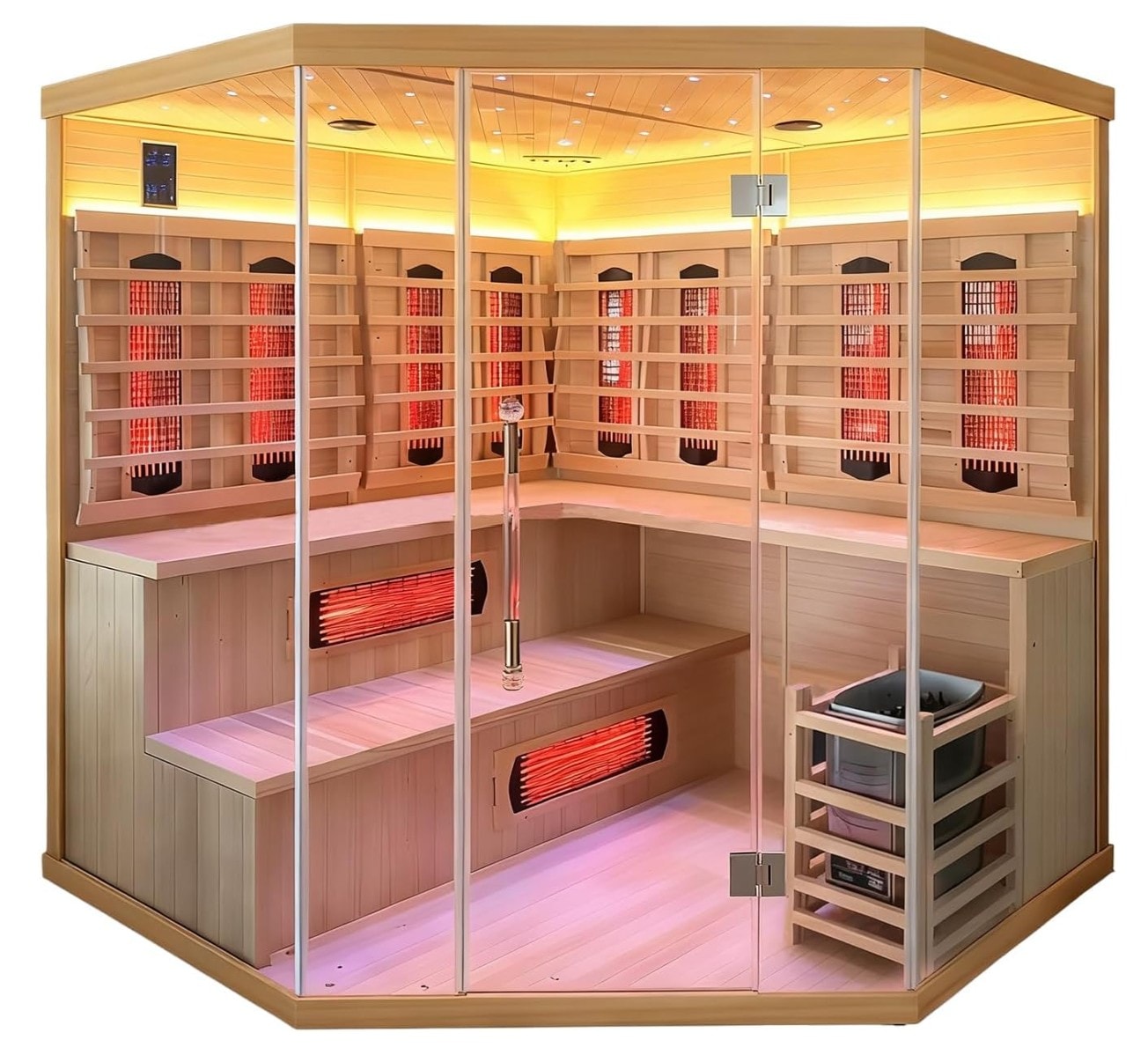
Best Infrared Overall
Amocan Infrared & Steam Sauna
$1,800–$2,200
- Full-spectrum IR + steam
- 2-person
- Plug-in 240V
- Assembles in 1 hr
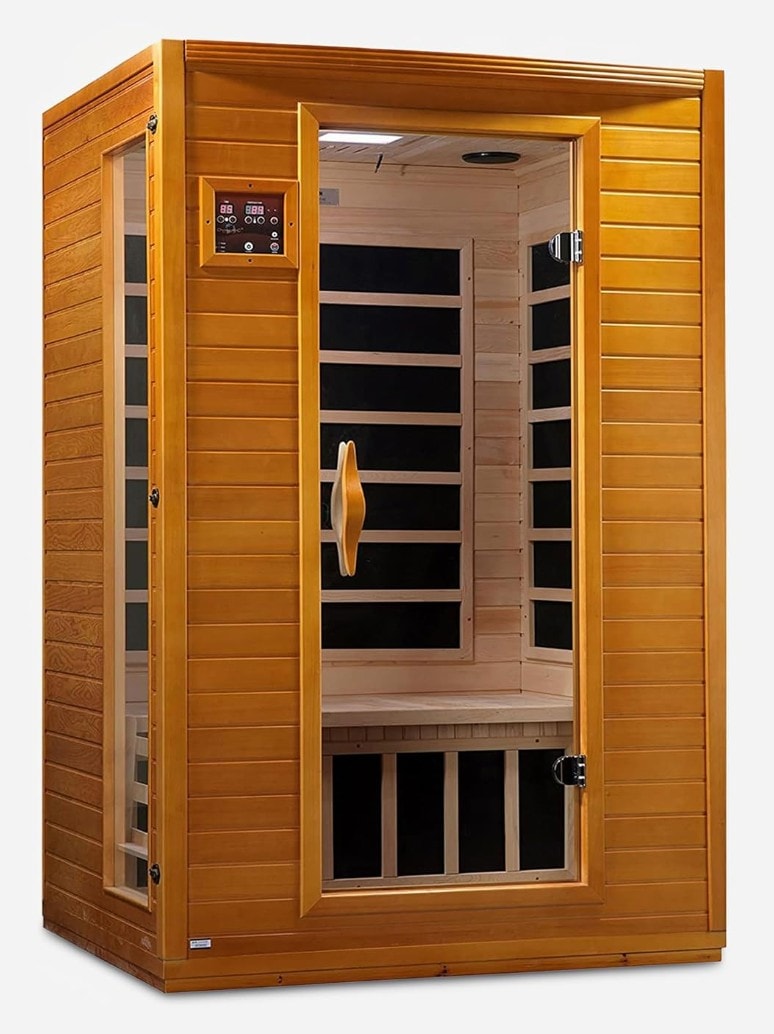
Best Infrared Mid-Range
Dynamic Madrid Elite
$1,400–$1,600
- 3-person
- Red light therapy
- Canadian hemlock
- Under $1,600
Best traditional saunas
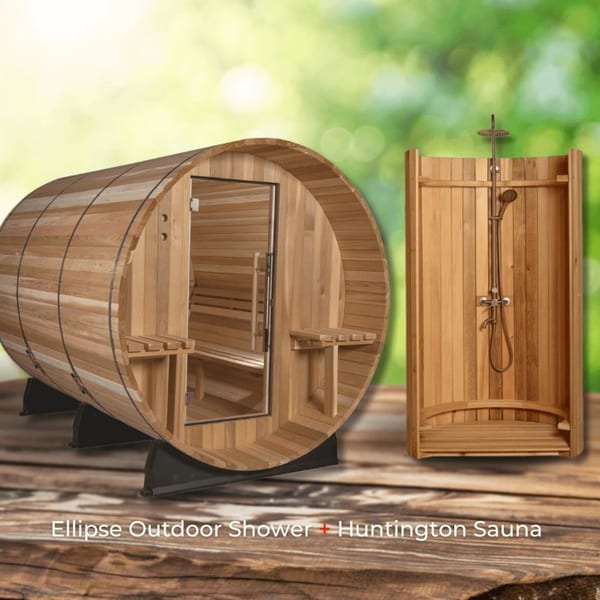
Best Traditional Outdoor
Almost Heaven Pinnacle Barrel Sauna
$3,500–$4,000
- Traditional Finnish experience
- Seats 4–6
- Nordic spruce barrel
- Stunning outdoor aesthetic
Frequently asked questions
Which sauna is better for weight loss?
Both infrared and traditional saunas produce similar caloric expenditure — approximately 300–600 calories per 30-minute session, primarily through sweating and elevated heart rate. The weight lost during a sauna session is almost entirely water weight, which is regained when you rehydrate. Long-term, regular sauna use supports weight management through improved metabolic function, reduced cortisol (which drives fat storage), and better sleep quality. Neither type has a significant advantage for weight loss specifically.
Is infrared sauna safe for people with heart conditions?
Infrared saunas are generally considered safer for people with mild cardiovascular conditions because the lower operating temperature (120–150°F vs 176–212°F) produces less acute cardiovascular stress. However, anyone with a diagnosed heart condition, hypertension, or arrhythmia should consult their cardiologist before starting any sauna routine. Research from the Mayo Clinic found that sauna use is safe for most stable heart disease patients, but individual risk varies significantly.
Can you add steam to an infrared sauna?
Some infrared saunas — like the Amocan Dual-System — include a built-in steam generator that allows you to add humidity to the infrared heat. This combination is popular because it delivers the deep tissue penetration of infrared with the respiratory benefits of steam. Standard infrared saunas cannot have steam added without a purpose-built steam generator. Traditional Finnish saunas use a ladle of water poured over hot rocks (kiuas) to create steam — this is called loyly and is central to the traditional sauna experience.
Which sauna is easier to install at home?
Infrared saunas are significantly easier to install at home. Most 1–2 person infrared saunas plug into a standard 120V outlet or require a 240V dedicated circuit — no plumbing, no special ventilation, and no structural modifications. Assembly takes 1–3 hours with basic tools. Traditional saunas require a 240V dedicated circuit, proper ventilation, and often a floor drain for steam models. Outdoor barrel saunas like the Almost Heaven Pinnacle require a level surface and electrical connection but no indoor installation. For most homeowners, infrared is the practical choice.